I remember those evenings when the day’s weight lingered like a heavy coat I couldn’t quite shrug off. The dim light filtering through the curtains, the faint hum of the world winding down outside—it was in those quiet moments that I first unrolled my mat, letting gentle yoga pull me toward calm. You might know that feeling too, the subtle ache in weary limbs after hours of motion, and how a simple flow can soften it all.
This routine became my anchor, a 15-20 minute ritual that fits right before bed, easing restless thoughts without demanding perfection.
The Quiet Pull of Dusk Hours
Evenings hold a natural invitation for unwinding, when the mind’s chatter starts to hush and the body signals it’s ready for rest. I used to scroll through screens long after dinner, feeling more restless with each swipe, until I traded that habit for time on the mat. There’s something about dusk—the softening light, the slower rhythm—that makes gentle yoga feel effortless, like a conversation with your own breath.
Those weary limbs find steadiness here, emerging calm replacing the day’s scattered energy. It reminds me of weekends when I’d notice how my shoulders dropped just from a few poses, no rush involved. If mornings suit something like an easy morning stretching routine to start flexible, evenings call for this deeper release.
This pull isn’t about forcing relaxation; it’s about meeting the body where it is, tired yet open. Over time, I found my sleep deepened, thoughts less tangled come morning. It’s a small shift that sticks when you let the hour guide you.
Carving Out a Cozy Nook at Home
You don’t need a dedicated studio—just a corner that feels like yours. I started in my living room, pushing the coffee table aside, layering a soft blanket over the carpet for that extra comfort. Dim the overhead lights, maybe light a candle; it turns the space into a gentle haven without any fuss.
No perfection required—my spot evolved from a cluttered rug to a weekly reset area, especially after busier days. Add a cushion for knees if needed, or keep water nearby. It’s these small touches that make returning to the mat feel welcoming, not like a chore.
Think of it as nesting for your unwind time. One evening, after a full weekend, that nook held me through the flow, steadying what felt scattered. Pair it with lighter evenings by trying to add more fruits to your meals easily, keeping energy light before you begin.
Breath as Your First Gentle Anchor
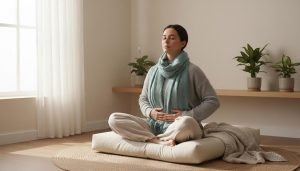
Before any pose, sit comfortably and take three slow breaths—inhale through the nose for four counts, exhale softly. I noticed how this simple start brought steadiness back to my chest, quieting the faint buzz of the day. It’s your entry point, grounding without effort.
Feel the rise and fall, letting shoulders soften on each out-breath. This warm-up takes under a minute but sets the tone, turning scattered into centered. Even on restless nights, it helped me pause and arrive fully.
A Flow That Eases the Day’s Hold
This sequence unfolds in five gentle steps, a 15-20 minute timeline that releases tension step by step. Move at your own ease, no clock-watching needed. Here’s how it flows:
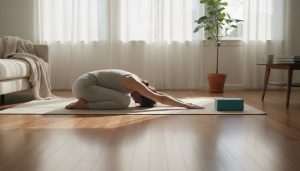
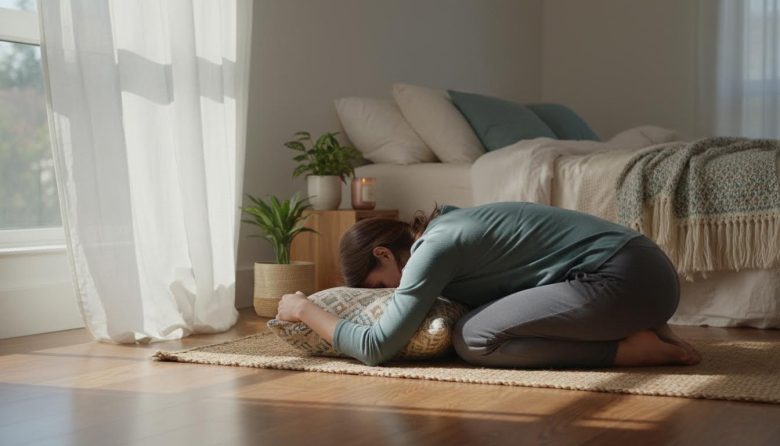
- Child’s Pose (1-2 minutes): Kneel on your mat, toes together, knees wide. Fold forward, arms extended or resting by your sides, forehead toward the floor. I found calm spreading through my back here, like the day folding away—breathe deeply, hold as feels steady.
- Cat-Cow on All Fours (5 breaths): Come to hands and knees, wrists under shoulders. Inhale to arch your back, lifting tailbone and chest (Cow); exhale to round the spine, tucking chin (Cat). This gentle wave eased my spine’s tightness, breath syncing with motion for emerging ease.
- Seated Forward Fold (1 minute): Sit with legs extended, feet flexed. Hinge forward from hips, hands toward feet or shins—soft bend in knees if needed. Tension in my hamstrings softened, a quiet stretch pulling me inward, steady breaths keeping it kind.
- Legs Up the Wall (3-5 minutes): Scoot hips close to a wall, swing legs up, arms relaxed by sides. Let gravity ease your legs, eyes soft or closed. This inversion drained the day’s pull from my lower body, calm washing over like a slow tide—perfect for weary evenings.
- Savasana (5 minutes): Lie flat on your back, palms up, legs apart. Close eyes, let breath settle naturally. Full rest here integrated it all; I often felt steadier, ready for sleep without lingering thoughts.
Transition smoothly between each, using breath as your guide. If something feels off, shorten holds or skip ahead. This flow built reliability in my evenings, a timeline that stuck through busier weeks.
What Helped Me, and Might Help You
Dimming the lights stood out most— it signaled my mind to unwind, cutting the glare that kept me alert. Here’s a simple checklist from evenings that worked:
- Layer a blanket under knees for Child’s Pose—soft support turned potential discomfort into ease.
- Add a drop of lavender oil nearby; the scent anchored calm without overwhelming.
- Play soft ambient sounds if quiet feels too stark—nature tracks matched my rhythm.
- End with a bedside note jotting one felt shift, like “less restless”—it made patterns clear over time.
These tweaks came from real trials, like after linking it to a 7-day home workout plan for fitness earlier in the week. No big changes, just steady additions that fit my flow. They might nudge yours toward consistency too.
One night, too tired for full effort, the scent alone steadied me enough to start. It helped when I kept expectations light, focusing on presence over pose perfection. Try one or two; see what lingers.
Your Gentle Experiment This Week
For the next five evenings, roll out your mat before bed and move through this flow. Jot a quick note by your bedside—maybe “from restless to steady?” or just how legs felt after the wall pose. It’s one small commitment, tracking subtle shifts without pressure.
Three to seven days reveals patterns, like how breath anchors quicker by day four. I noticed sleep came easier mid-week, body remembering the calm. Keep it gentle—no judgment if a night slips.
What might one steady evening invite? Tonight, begin with those three breaths and let it unfold.
A Few Evening Yoga Notes
Do I need any yoga experience to start?
No, this routine welcomes beginners fully—it’s designed for listening to your body above all. Start slow, use props like cushions if poses feel new. I came to it with zero background, and the simplicity held me steady from the first try.
How long does the full routine take?
About 15-20 minutes from breath to Savasana, slipping easily into your wind-down. Holds are flexible, so it adapts to your energy—shorter on extra tired nights. It became my reliable bookend to the day.
What if I feel too tired for poses?
That’s common; scale back to breath or just Legs Up the Wall—those alone ease a lot. Rest in Child’s Pose if needed, letting it be restorative. Even partial flows brought calm on my weariest evenings.
Can I do this on a full stomach?
Best to wait 1-2 hours after eating for comfort, avoiding any twist in the belly. Lighter snacks earlier keep it smooth. I timed it post-dinner digestion, noticing steadier holds.
Is a yoga mat necessary?
Not at all—a folded blanket, carpet, or towel works fine for grip and cushion. I used what was handy at first, upgrading only later. The key is the space feeling supportive, not the gear.